

Your Complete Guide to Exploring the Best of Italy
Italy, a land of timeless beauty and rich history, captivates with its iconic landmarks, delectable cuisine, and vibrant culture. From the romantic canals of Venice to the ancient ruins of Rome, Italy offers a blend of art, history, and modernity. Explore stunning cathedrals, savour authentic Italian dishes, and experience lively festivals. The country’s picturesque countryside, charming coastal towns, and renowned art scenes make it a top destination for travellers. Italy’s unique charm ensures an unforgettable travel experience.
When to visit
Temp Range
Currency
Min Budget


Apr – Jun
Sep – Oct
20 – 30°C
68 – 86°F
Euro (EUR)
$50 – 70/day
Top Attractions
See below for a selection of the top attractions in Italy, review the map to see where these are located to help plan your trip.
Colosseum
The Colosseum in Rome is an ancient amphitheatre that once hosted gladiatorial contests and public spectacles. Visitors can explore its iconic architecture, underground chambers, and learn about ancient Roman history and engineering marvels. The Colosseum remains a symbol of Roman power and is one of Italy’s most visited landmarks.
Access from – Rome
Vatican Museums and Sistine Chapel
The Vatican Museums house an extensive collection of art and artefacts, including masterpieces by Michelangelo and Raphael. Visitors can admire the Sistine Chapel’s famous ceiling frescoes and explore galleries showcasing ancient sculptures, tapestries, and Renaissance paintings. The museums offer insights into Vatican City’s cultural and religious heritage.
Access from – Vatican City
Leaning Tower of Pisa
The Leaning Tower of Pisa is a medieval bell tower known for its unintended tilt. Visitors can climb its spiralling staircase, enjoy views of Pisa from the top, and explore nearby attractions like Pisa Cathedral and Baptistery. The tower’s unique architecture and historical significance make it a UNESCO World Heritage site and iconic Italian landmark.
Access from – Pisa
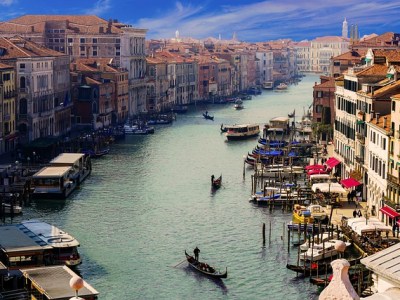
Venice Canals
Venice is renowned for its intricate network of canals, lined with historic buildings and connected by picturesque bridges. Visitors can explore the Grand Canal by vaporetto, gondola, or water taxi, passing landmarks like St. Mark’s Basilica and the Rialto Bridge. Venice’s canals offer a romantic and atmospheric way to experience the city’s unique charm and cultural heritage.
Access from – Venice
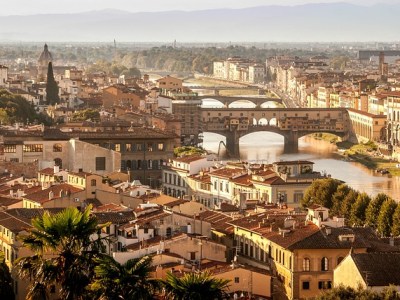
Florence Cathedral (Duomo)
Florence Cathedral, or the Duomo, is a Gothic masterpiece with a stunning dome designed by Brunelleschi. Visitors can climb the dome for panoramic views of Florence, admire Giotto’s Bell Tower, and explore the cathedral’s interior with its intricate marble floors and frescoes. The Duomo complex epitomizes Florence’s artistic and architectural achievements during the Renaissance.
Access from – Florence
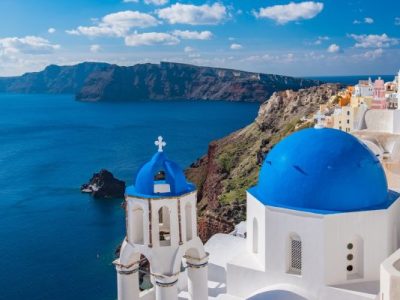
Amalfi Coast
The Amalfi Coast in southern Italy is renowned for its dramatic coastline, pastel-coloured villages nestled into cliffs, and azure waters. Visitors can drive along the winding coastal road, explore charming towns like Positano and Amalfi, and relax on picturesque beaches. The Amalfi Coast offers stunning vistas and a Mediterranean atmosphere that captivates travellers.
Access from – Amalfi, Positano, Sorrento
Pompeii
Pompeii, near Naples, is an ancient Roman city frozen in time by the eruption of Mount Vesuvius in 79 AD. Visitors can explore well-preserved ruins, including temples, villas, and the famous plaster casts of volcanic victims. Pompeii provides a fascinating glimpse into daily life during the Roman Empire and is a UNESCO World Heritage site.
Access from – Naples
Cinque Terre
Cinque Terre is a UNESCO World Heritage site comprising five colourful fishing villages clinging to the cliffs along the Ligurian coast. Visitors can hike scenic trails, swim in turquoise waters, and explore charming streets lined with pastel houses. Cinque Terre’s natural beauty and traditional charm make it a popular destination for hiking and seaside relaxation.
Access from – Monterosso al Mare, Vernazza, Corniglia
Trevi Fountain
Rome’s Trevi Fountain is a Baroque masterpiece and one of the city’s most famous landmarks. Visitors can toss a coin into the fountain to ensure their return to Rome, admire the sculpture of Oceanus and tritons, and soak in the fountain’s grandeur illuminated at night. The Trevi Fountain symbolizes Rome’s artistic heritage and timeless allure.
Access from – Rome
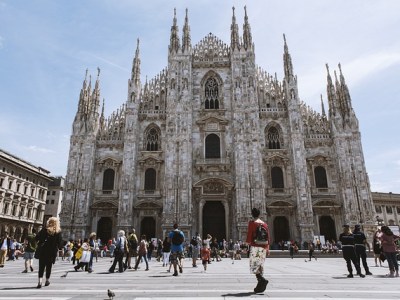
Milan’s Duomo
Milan Cathedral, or the Duomo, is a magnificent Gothic cathedral adorned with spires and statues. Visitors can climb to the rooftop for panoramic views of Milan, admire intricate marble facades, and explore the cathedral’s interior with stained glass windows and elaborate altars. Milan’s Duomo is a symbol of the city’s religious devotion and architectural splendour.
Access from – Milan
Lake Como
Lake Como, in northern Italy, is known for its stunning scenery, luxurious villas, and charming towns. Visitors can cruise on the lake, visit beautiful gardens like Villa del Balbianello, and explore towns such as Bellagio and Como. Lake Como offers a serene retreat with breath-taking views of the Alps and pristine waters.
Access from – Como, Bellagio
Uffizi Gallery
The Uffizi Gallery in Florence is one of the world’s oldest and most renowned art museums, housing masterpieces by Botticelli, Michelangelo, and Leonardo da Vinci. Visitors can admire iconic works such as Botticelli’s “The Birth of Venus” and explore the gallery’s extensive collection of Renaissance art, making it a cultural highlight of Florence.
Access from – Florence
Siena’s Piazza del Campo
Piazza del Campo in Siena is a UNESCO World Heritage site and the city’s main square. Visitors can marvel at its unique shell-shaped design, visit the Palazzo Pubblico and Torre del Mangia, and witness the Palio horse race. The square’s medieval architecture and vibrant atmosphere capture Siena’s rich history and civic pride.
Access from – Siena
St. Mark’s Basilica
St. Mark’s Basilica in Venice is a Byzantine masterpiece adorned with mosaics, domes, and marble columns. Visitors can marvel at its golden interior, visit the Pala d’Oro altarpiece, and climb the basilica’s terraces for panoramic views of St. Mark’s Square and the Venetian lagoon. The basilica symbolizes Venice’s wealth, artistry, and religious devotion.
Access from – Venice
Capri
Capri, an island in the Bay of Naples, is celebrated for its natural beauty, rugged coastline, and upscale atmosphere. Visitors can explore the Blue Grotto sea cave, visit the Gardens of Augustus, and stroll through Capri Town with its designer boutiques and cafes. Capri’s allure lies in its Mediterranean charm and breath-taking vistas.
Access from – Naples, Sorrento
Tuscany
Tuscany, nestled in central Italy, is a region celebrated for its enchanting landscapes adorned with vineyards and olive groves. Its iconic medieval hill towns such as Siena and San Gimignano offer glimpses into history, while Florence, the capital, dazzles with its Renaissance masterpieces. Tuscany is a haven for art aficionados, wine enthusiasts, and those seeking the quintessential Italian experience amid timeless beauty and cultural richness.
Map
See map of Italy to review top attractions. For the best experience save locally to open with google maps/share with your friends to help plan your next adventure! Some locations are hidden behind others, click map to reveal full details:

Transport
Italy’s key transport routes for holidaymakers include an extensive train network, with high-speed trains connecting major cities like Rome, Florence, Venice, and Milan. Domestic flights are useful for longer distances, such as from Rome to Sicily. Major airports include Rome Fiumicino, Milan Malpensa, and Venice Marco Polo. Buses and trams are efficient for local travel, particularly in cities like Rome and Florence. Taxis are readily available, with MyTaxi and Free Now being primary ride-hailing apps, ensuring convenient and reliable transportation options for travellers.
Budget
Traveling in Italy varies in cost; budget travellers spend around $50-$70 per day, covering hostels and local eateries; mid-range travellers budget $100-$140 for comfortable hotels and dining out; luxury travellers may spend $300+ daily, enjoying high-end hotels, gourmet dining, and private tours. Major cities tend to be more expensive.
Seasonality and Weather
Italy’s weather varies significantly from north to south. Northern Italy, including Milan, experiences cold winters (0-5°C, 32-41°F) and warm summers (25-30°C, 77-86°F). Central regions like Rome have mild winters (5-10°C, 41-50°F) and hot summers (25-35°C, 77-86°F). Southern areas, including Naples and Sicily, enjoy mild winters (10-15°C, 50-59°F) and very hot summers (30-40°C, 86-104°F). Coastal regions tend to have milder winters and cooler summers compared to inland areas. The best time to visit is spring (April-June) and autumn (September-October), when temperatures are pleasant, and tourist crowds are smaller, allowing for a more enjoyable experience.
Must Try Dishes



Language
The main language spoken is Italian. Below are some key phrases (phonetic translation) to get you started. A big smile and a few words can get you a long way!






 WindingTravel